
Organic Tobacco Leaf: What USDA Organic Means for Whole Leaf
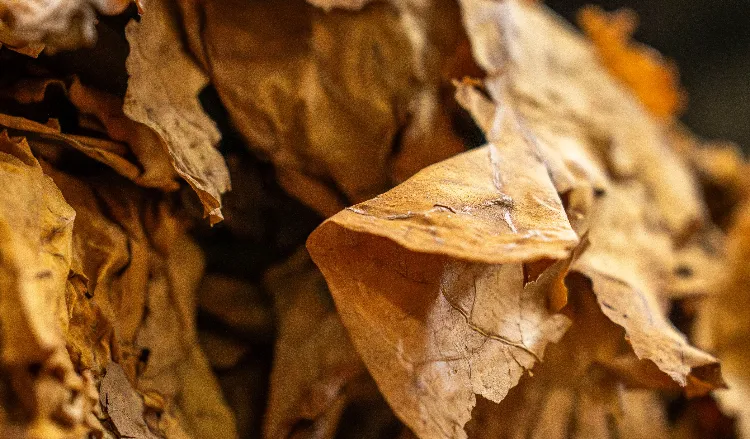
Organic tobacco leaf is tobacco grown and handled under the USDA's National Organic Program. On the farm, that means no synthetic pesticides or fertilizers outside a short approved list, no GMO seed, and a field that's been clean of prohibited substances for at least 3 years before harvest. After harvest, every business that handles the leaf on its way to you has to be certified too.
That second part is where a lot of "organic" tobacco falls apart. More on that below.
What the USDA organic label requires on the farm
The rules live in 7 CFR Part 205, and they apply to tobacco the same way they apply to corn or tomatoes:
- The 3-year rule. No prohibited substances on the field for 3 years immediately before harvest.
- Synthetics are banned unless listed. Natural substances are allowed unless specifically prohibited. So organic farms still fight bugs and mold, just with tools from the approved list.
- No genetic engineering, sewage sludge or irradiation.
- A paper trail. Growers file a written Organic System Plan and get an on-site inspection from a USDA-accredited certifier every year, with periodic residue testing on top.
The transition period can be rough on farmers - especially since many farmers grow conentional crops other than just tobacco. Anything harvested during those 3 years has to be sold as conventional, so a grower switching over follows organic rules for 3 seasons and still gets conventional prices. Add smaller yields and more hand labor, and you can see why so little organic tobacco gets planted. (The USDA National Organic Program site has the full rundown on the program if you want it.)
Organic leaf has to be handled organic too
Growing it is only half the job. Once organic leaf leaves the farm, anyone who stores it, repacks it or sells it under their own name has to be a certified organic handler. If a reseller without that certification touches the leaf, it can't be sold as organic anymore. The grower's certificate doesn't carry over.
Leaf Only is a USDA certified organic handler. We go through a certified inspection process every year, similar to our growers that requires:
- A written Organic System Plan covering how we receive, store, pack and ship organic leaf
- An annual on-site inspection by an accredited certifier
- Organic lots kept separate from conventional leaf so the two never mix
- Records that trace every bag back to the lot and farm it came from
You can verify any of this yourself. Here's our listing in the USDA Organic Integrity Database. If you're buying organic tobacco from anyone else, look them up in the same database first. If the seller isn't in there, the leaf they're selling you isn't actually certified organic, regardless of what the bag says.
Organic vs all natural
These two get mixed up a lot, and they describe different things.
- Organic is about how the leaf was grown and handled, with a certifier checking both.
- All natural is about what happens after harvest. Nothing gets added: no casings, sugars, humectants or flavorings sprayed on in a factory.
All of our whole leaf is all natural, organic or not. A tobacco leaf from Leaf Only is the leaf and nothing else. Nobody sprays a casing on it or mixes it with reconstituted sheet, which is a big part of what goes into a commercial cigarette and other finished tobacco products.
So what about our conventional leaf? Some farmers use food-grade pesticides and fungicides throghout the growing process. Actual practices vary depending on where the leaf was grown and what challenges the variety faces. Organic leaf skips synthetic inputs entirely. If that growing difference matters to you, buy organic. If what you mostly want is leaf with nothing added after curing, conventional whole leaf already gets you there.
Organic tobacco leaf we carry
Organic tobacco is a small crop and supply moves around year to year. As of the date this article was written, we carry 3 USDA organic leaves:
| Leaf | Grown in | Cure | Good for |
|---|---|---|---|
| Organic American Virginia Flue Cured | USA | Flue-cured | Cigarettes, pipe, hookah |
| Organic Canadian Virginia Flue Cured | Canada | Flue-cured | Cigarettes, pipe, hookah |
| Organic Burley | USA | Air-cured | Cigarette blends, pipe, chew |
You can see everything that's in stock today on our organic tobacco leaf page.
One honest note. Organic leaf usually looks a little rougher than our conventional grades in general. Because of the lack of pesticides, fungicides, and fertilizers used in the growing process, you can expect more spots, discolorations and tears. These imperfections, especially on flue cured and burley, are completely normal - even in conventional tobaco leaves. Mostly because of the growing process as well as lack of desire for nice looking leaves from the larger industry buyers (customers like Santa Fe are less interested in how it looks and more in how it burns).
How to use organic leaf
Organic tobacco for rolling cigarettes
Organic Virginia is where most people start. It's bright, sweet and mild, and it burns clean on its own.
Want more body? Cut in 20 to 30% organic Burley. That gets you an all-organic blend in the neighborhood of a classic American cigarette mix (minus the occasional Oriental leaf, which we don't have in organic). Our guide to blending cigarette tobacco from whole leaf walks through some of the ratios and how each leaf changes the smoke.
Organic pipe tobacco
Virginia is the backbone of a ton of pipe blends. Organic Virginia by itself makes a sweet, simple straight-Virginia bowl, and a pinch of Burley rounds it out.
Once you start adding Perique or Latakia, the blend won't be fully organic anymore. That's fine, just know what you're mixing. Our beginner's guide to blending pipe tobacco covers what each component does.
Organic chewing tobacco
Burley is the traditional base for loose leaf chew because it soaks up sweeteners and flavorings well. Organic Burley works the same way. Here's how to make chewing tobacco at home from whole leaf.
Hookah
Most shisha starts with flue-cured Virginia. Organic Virginia gives you a base where you control everything that goes in, from the glycerin to the molasses to the fruit.
Buying and storing organic leaf
- Start with a sample. We sell quarter-pound samples of all 3 organic leaves, which is enough to try a test batch before you commit to pounds.
- Buying in bulk or reselling? Head to our wholesale page and the team will set you up.
- Store it like any other leaf. Keep it sealed, out of the sun and at steady humidity. Dry is always safer than moist for long term storage. More detail in our guide on how to store whole leaf tobacco.
Organic tobacco FAQ
How do I know if tobacco is really organic?
Look the seller up in the USDA Organic Integrity Database. Both the farm and every handler in between need to be certified. A seller who repacks organic leaf without their own certification can't legally call it organic.
Is organic tobacco additive-free?
Organic rules cover farming and handling. Whether anything gets added later depends on who processes it. With whole leaf from us, nothing is added after curing, whether it's grown organically or conventionally.
Can I grow my own organic tobacco?
Sure, you can grow tobacco using organic methods in your own garden. To sell it as USDA organic you'd need to go through certification yourself.