
Burley: An Essential Ingredient in American Tobacco History
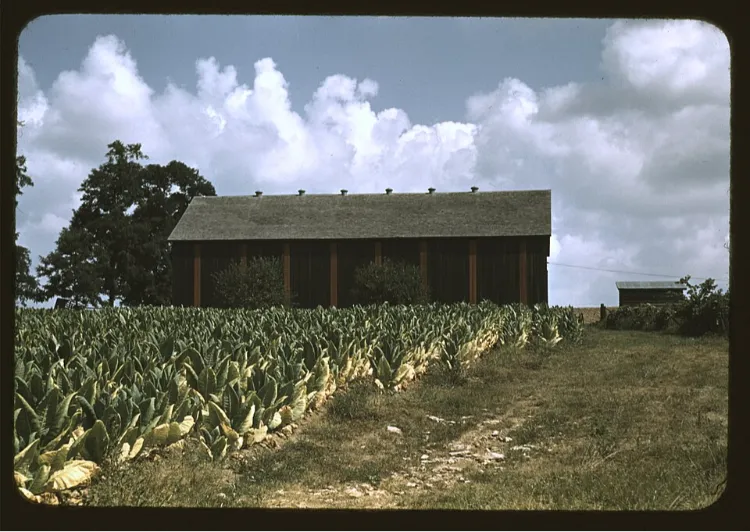
Burley is a light, air-cured tobacco grown mostly in Kentucky and Tennessee. It's low in natural sugar, full in body and naturally strong, so blenders use it as a supporting leaf that adds weight and depth to blends built around Virginia flue-cured. For more than 150 years, it has shaped how Americans chew, smoke and farm tobacco.
A Kentucky Leaf With Ohio Roots
Most accounts trace Burley to 1864, when George Webb and Joseph Fore grew a pale, light-colored strain near Higginsport, Ohio, from seed that came out of Bracken County, Kentucky. The leaf cured so much lighter than other tobaccos of the day that it became known as White Burley, the type behind nearly all Burley grown today and the reason it's still called "light air-cured."
Demand grew fast. By 1883 Cincinnati was the leading market for the new leaf, and crops had spread across central Kentucky and Middle Tennessee.
The Leaf That Built the Plug Trade
Burley's first big break came from chewing tobacco. The cured leaf is porous and absorbent, and growers in Kentucky and Missouri found it soaked up sweeteners like molasses, honey and licorice better than other types. Through the late 1800s, sweetened Burley plug and twist became a staple of American chew.
That same absorbency still makes Burley the traditional base for loose leaf chew today. Our guide on how to make chewing tobacco at home shows how it's done with whole leaf.
Shaping the American Cigarette
In 1913, R.J. Reynolds launched Camel, a cigarette built on a blend of flue-cured and Burley leaf with a touch of Turkish tobacco. Within 4 years it was the best-selling cigarette in the country, according to NCpedia, and its formula became the template for what the industry still calls the American blend.
In that blend, Virginia flue-cured is the foundation and Burley adds body and strength. The pairing has defined the American cigarette ever since.
A Way of Life on Kentucky Farms
For most of the 20th century, Burley was the cash crop that kept small Kentucky farms running. Growers organized the Burley Tobacco Growers Cooperative Association in the early 1920s, and a federal quota and price support program managed production for decades until the 2004 buyout, as the University of Kentucky Cooperative Extension recounts.
Kentucky still grows most of the nation's Burley: an estimated 51.3 million of the 57 million pounds produced in 2024, according to the USDA National Agricultural Statistics Service. Leaf Only is part of that tradition. Our 60,000 square foot Kentucky warehouse receives leaf directly from farmers in the region.
Cured Slowly in Open Air
At harvest, the whole stalk is cut and hung in open, ventilated barns with no added heat. Over 6 to 8 weeks the leaf dries slowly and turns from green to a light tan or reddish brown.
That slow cure breaks down nearly all of the leaf's natural sugar, which is the main reason Burley smokes so differently from Virginia. With little sweetness to soften it, and naturally more nicotine than flue-cured leaf, Burley comes across dry, nutty, earthy and noticeably strong. Few people smoke it on its own.
Putting Whole Leaf Burley to Work
In a cigarette blend, start with roughly 20 to 30% Burley and the rest Virginia, then adjust. More Burley brings a fuller, stronger smoke. Less keeps the blend light and sweet. Our guide to blending cigarette tobacco from whole leaf covers ratios in more detail.
Pipe smokers use Burley the same way, adding body to Virginia or carrying the flavor in an aromatic blend, as covered in our beginner's guide to blending pipe tobacco. We don't recommend Burley for cigars, which call for dedicated wrapper, binder and filler leaf.
Whole Leaf Burley vs Commercial Blends
Because Burley has so little natural sugar, commercial cigarette makers have generally treated it with a casing of sugars, humectants and flavorings before blending. The finished blend is then mixed with reconstituted sheet made from stems, scraps and tobacco dust. Our article on what goes into a commercial cigarette explains that process.
Whole leaf Burley from Leaf Only is all natural, with nothing added after harvest. You get the actual leaf, and you decide how much goes into your blend and whether to flavor it at all.
Burley From Leaf Only
As of the date this article was written, we carry our smooth, light air-cured Burley and Organic Burley, which is grown and handled under USDA organic standards. For growers, we also offer Golden Seal Special Burley seeds.
Expect some spots, discoloration or broken leaf here and there. That's normal for Burley, which is graded for how it burns rather than how it looks, and none of it matters once the leaf is shredded. Store it sealed, out of direct sunlight and at a stable temperature. Dry is always safer than moist for long-term storage.
Buying in bulk or reselling? Visit our wholesale page. Whether it's going into a cigarette blend, a pipe or a pouch of chew, a little Burley from Kentucky still does what it has done for generations.